Rank Higher in App Stores, Get More Downloads
ApsteQ is an ASO company running app store optimization services for iOS and Android apps: keyword research, listing and metadata optimization, screenshot and icon testing, and ongoing A/B testing against install rate. We have managed $2.5M+ in mobile ad spend, and better store conversion lowers the cost of every paid install you buy.
How long does App Store Optimization take to show results?
ASO compounds rather than switching on. Store listing work shows up first in conversion rate, since icon, screenshot and first-impression changes affect every visitor immediately, while keyword ranking movement follows as the stores re-index and gather signal. Adapting a store listing for a single market has produced a 93.10 percent increase in search downloads and a 43.95 percent lift in search impressions in one published case (Admiral Media, NeuroNation Korea). ApsteQ runs ASO as a continuous test cycle rather than a one-off audit, because store algorithms reward sustained relevance.
What is App Store Optimization?
App Store Optimization is the process of improving your app's visibility in the Apple App Store and Google Play Store. Just like SEO improves website rankings on Google, ASO improves app rankings in app stores. When users search for keywords related to your app category, you want to appear at the top. More visibility means more clicks. More clicks means more downloads. And more downloads drives revenue, engagement, and growth.
Higher Visibility
Your app appears in top search results when users look for solutions your app provides.
More Downloads
Higher rankings and better positioning drive qualified user acquisition without paid ads.
Lower CAC
Organic app store visibility is free. No paid ads needed to drive qualified installs.
The Key Components of App Store Optimization
We optimize every element of your app listing to maximize visibility and conversion.
Keyword Research & Targeting
We identify high-intent keywords that users search for in app stores. We analyze search volume, competition, and user intent to find keywords that drive qualified downloads. Different approach than web SEO.
- Search volume and difficulty analysis
- User intent matching to app category
- Competitive keyword analysis
App Title & Subtitle Optimization
Your app title and subtitle are prime real estate for keywords. We craft compelling titles that rank for target keywords while conveying your app's unique value. Both iOS and Android have specific character limits and formatting rules.
- Primary keyword inclusion in title
- Value proposition and differentiation
- Platform-specific formatting
Screenshot & Video Design
Screenshots and preview videos are your app's first impression. We design conversion-optimized visuals that showcase key features, benefits, and differentiation. These must convert casual browsers into downloaders.
- Conversion-optimized screenshot sequences
- Feature highlighting and benefit communication
- Platform-specific dimensions and requirements
Review & Rating Management
App store algorithms favor apps with higher ratings and more recent reviews. We implement systems to encourage positive reviews from satisfied users and manage your app's reputation systematically.
- In-app review request optimization
- Response framework for negative reviews
- Rating trend monitoring and improvement
A/B Testing Your App Listing
The best ASO strategies are built on data. We continuously test different titles, subtitles, screenshots, and descriptions to identify what converts best. Small improvements in conversion rate compound into significant download increases over time.
- Test variants: Different keyword combinations, messaging angles, visual styles
- Measure metrics: Impressions, tap-through rate, install rate, download conversion
- Iterate rapidly: Win variants become new baseline for next round of testing
- Scale winners: Best performers become permanent changes to your listing
Average conversion rate improvement
Typical download increase after full ASO
Ad spend required for organic visibility
Building the Keyword Set, Not Just a Keyword List
Most listings target a handful of obvious head terms and leave the rest of the store's demand untouched.
A store listing does not rank for one keyword at a time. Apple and Google both build queries from combinations of the words in your indexed fields, so the useful unit of work is the full set of terms your app should be eligible for, not a shortlist. Vendors sometimes call this a semantic core. The practical version is simpler: group every term a buyer might type into intent tiers, then decide which tier each metadata field should serve.
Head terms
Category words with the highest volume and the highest competition, for example "meditation app". Rarely winnable at launch. These belong in the app name only when they genuinely describe the app.
Mid-tail
Two and three word phrases that pair the category with a qualifier, for example "sleep meditation for anxiety". This is where the subtitle and keyword field earn their place, and where most early ranking actually happens.
Competitor and brand
Terms users type when they already know a rival product. Low volume individually, but they convert, and on Google Play the description is the only field that can carry them.
Localization is keyword coverage, not translation
Each App Store localization carries its own name, subtitle and keyword field, so adding a locale adds indexed characters rather than merely restating the same words in another language. Apple documents that an app name can be up to 30 characters, a subtitle up to 30, and the keyword field up to 100 characters with terms separated by commas and no spaces (Apple, App Store product page guidelines). Google Play caps the app name at 30 characters, the short description at 80 and the full description at 4,000 (Google Play Console Help).
The practical consequence: a listing available in one locale is competing with a fraction of the metadata that a properly localized competitor is using. Before paying for translation, the higher-return move is usually to fill the fields you already have. Promotional text is the exception worth knowing, since Apple states it does not affect search ranking, so it is a merchandising slot rather than a keyword slot.
ASO Strategy for iOS vs Google Play
Different platforms, different algorithms, different optimization approaches.
Apple App Store (iOS)
- Title: 30 characters max, critical for ranking
- Keywords: 100-character field, comma separated with no spaces. Do not repeat words already in the name or subtitle
- Subtitle: 30 characters, indexed for search and shown under the name
- Promo text: 170 characters, updatable without a release, but it does not affect ranking
- Algorithm: Focuses on title match, rating, download velocity
- Screenshots: Up to 5 per language, heavily weighted in algorithm
- Trends: More conservative; established apps rank well
Google Play Store (Android)
- Title: 30 characters max, the highest-weighted metadata field
- Keywords: No keyword field. Short description (80 chars) and full description (4,000 chars) are both indexed
- Algorithm: Considers title, description, reviews, installs, engagement
- Screenshots: Up to 8 per language, strong conversion driver
- Trends: More dynamic; rapid movers can rank quickly
How We Measure ASO Success
ASO success isn't about vanity metrics. We track the metrics that actually drive your business: more qualified downloads, better user retention, and lower acquisition cost.
Primary Metrics
- Search impressions
- Install rate (conversions)
- App rating and reviews
- Rank position for key keywords
Secondary Metrics
- Day 1 retention rate
- Day 7 and Day 30 retention
- Cost per install (CPI)
- Lifetime value per install
What Does Good ASO Actually Look Like in 2026?
Most ASO pitches quote conversion lifts with no baseline. Here are the numbers we hold ourselves to, and the public benchmarks we measure against. If an agency cannot tell you the median for your category, they are guessing.
| Metric | Weak | Median | Strong |
|---|---|---|---|
| App Store conversion rate (browse) | under 20% | 25-30% | 35%+ |
| Tap-through rate, Apple Ads | under 3% | 5-7% | 10%+ |
| Keywords ranked top 10 | under 15 | 40-80 | 150+ |
| Day-1 retention | under 20% | 25-30% | 40%+ |
| Median Apple Ads cost per tap | $3.00+ | $0.92 | under $0.50 |
Sources: AppTweak Apple Ads benchmarks 2026, Adapty (90 countries), Business of Apps. Ranges vary sharply by category: Apple Ads cost per tap runs from $0.24 (Religion) to $14.41 (Sports).
The ApsteQ ASO Loop
ASO is not a one-time listing edit. We run it as a four-week loop, and we publish the loop so you can hold us to it.
- 1. Baseline. Pull current keyword rankings, conversion rate, and category median. Nothing changes until we know where you actually stand.
- 2. Keyword expansion. Build the target set from real search volume and competitor gaps, not intuition. Both stores, scored by difficulty against your current authority.
- 3. Creative test. Screenshot order and first-frame video drive conversion harder than title tweaks. One variable per test.
- 4. Measure and compound. Rankings move on a two-to-four week lag. We hold changes long enough to read them, then feed the winner back into step 2.
Why Most ASO Engagements Underperform
- Optimising the title, ignoring the screenshots. Metadata gets you impressions. Creative converts them. Teams over-invest in the first and under-invest in the second.
- Testing several variables at once. If you change the icon, screenshots, and subtitle together, you have learned nothing about which one worked.
- Reading results too early. Store algorithms take weeks to settle. Reverting after five days is the most common way to destroy a winning test.
- Treating iOS and Google Play as one job. Apple indexes the title, subtitle and keyword field. Google Play indexes the full description. The same copy cannot serve both.
How Long Does ASO Take to Show Results?
App Store Optimization typically shows measurable ranking movement in two to six weeks. Metadata changes need time to index before either store re-evaluates your position, and creative tests need enough traffic to reach statistical significance. Reverting a change after five days is the single most common way teams destroy a test that was about to win. Rating improvements take months because you are moving an average, and retention work needs a full thirty-day cohort before day-30 numbers mean anything at all.
| Change | Time to read | Why |
|---|---|---|
| Keyword / metadata | 2-6 weeks | Store must re-index and re-rank |
| Screenshots / icon | 1-2 weeks | Needs traffic for significance |
| Rating improvement | 1-3 months | You are moving an average |
| Retention changes | 30+ days | One full cohort minimum |
What Is the Difference Between ASO on iOS and Google Play?
Apple and Google index different fields, so the same listing copy cannot serve both stores. Apple indexes the app name, subtitle, and a hidden 100-character keyword field, and it does not index the long description at all. Google Play does the opposite: there is no keyword field, and the full description is indexed, so keyword coverage there has to read naturally inside real sentences. On iOS you never repeat a word across fields, because Apple treats them as one combined keyword set and duplication wastes characters you cannot spare.
| Field | Apple App Store | Google Play |
|---|---|---|
| App name | Indexed, highest weight | Indexed, highest weight |
| Subtitle / short description | Indexed | Indexed |
| Keyword field | 100 characters, hidden | Does not exist |
| Long description | Not indexed | Indexed, density matters |
| Ratings & retention | Ranking factor | Ranking factor |
Is ASO Better Than Paid User Acquisition?
ASO and paid acquisition are multiplicative, not alternatives. Store listing conversion rate applies to every visitor you send to the page, whether they arrived organically or through an ad you paid for. Improving conversion from 25% to 35% lowers the effective cost of every paid install by roughly a third without touching a single bid. That is why running paid media against an unoptimised listing is the most expensive sequencing mistake in app marketing: you pay full price for traffic that bounces at the door.
How Much Does an ASO Agency Cost?
ASO engagements typically run between $2,000 and $10,000 per month, or $5,000 to $25,000 for a fixed-scope project. Retainers suit ongoing keyword and creative iteration; projects suit a one-time listing overhaul before a launch. The question that matters more than the rate is what you are buying: an agency that only edits metadata is doing perhaps a third of the job, because creative testing and retention both feed store ranking. Ask what the deliverable is in month two, when the obvious metadata wins are already banked.
What Does an App Store Optimization Agency Actually Do?
An app store optimization agency owns the conversion surface between your ad click and your install: the store listing itself. That is a narrow remit and a high-leverage one, because store conversion rate multiplies across every channel at once. Lift it from 25% to 30% and every paid campaign, every organic impression, and every referral gets 20% cheaper per install without touching a bid.
ApsteQ operates as an app store optimization agency for iOS and Google Play across the US and India, running ASO either as a standalone engagement or as one component of the wider AppFlow™ System. The distinction that matters when comparing agencies is whether ASO is treated as a one-off listing rewrite or as a continuous experiment programme. Store algorithms, competitor listings, and category keyword difficulty all move monthly; a listing optimised once and left alone decays.
Scope of an ASO engagement
| Workstream | What it covers | Measured by |
|---|---|---|
| Keyword optimisation | Title, subtitle, keyword field (iOS), short and long description (Play), localisation for priority markets | Keyword rank movement, organic impressions |
| Creative testing | Icon, screenshots, preview video, ordering and messaging hierarchy | Store conversion rate |
| Custom Product Pages | Per-campaign iOS variants and Play custom listings so ad creative matches the page it lands on | Conversion rate by traffic source |
| Ratings and reviews | In-app prompt timing, review velocity monitoring, sentiment themes fed back to product | Average rating, review volume |
| Competitive tracking | Category keyword difficulty, competitor listing changes, algorithm shifts after store updates | Share of category visibility |
How to choose between ASO agencies
Four questions that separate an ASO agency from a listing copywriter:
- Do they test, or do they rewrite once? Ask for the experiment cadence and how results are called. A programme without a testing schedule is a one-off deliverable priced as a retainer.
- Do they report store conversion rate, or only keyword ranks? Ranks are a means; conversion rate is the number that lowers your cost per install.
- Do they handle iOS and Play differently? The algorithms, keyword mechanics, and testing tools genuinely differ. An agency running one playbook across both is guessing on one of them.
- Does ASO talk to paid? Creative that wins in Apple Search Ads should inform the screenshots, and vice versa. When these run as separate contracts, that feedback loop is what you lose.
ApsteQ ASO engagements start from $2,000 per month standalone. Full pricing across stages is published on the app marketing agency cost page, including the cases where we will recommend against hiring an agency at all.
Frequently Asked Questions
What is App Store Optimization (ASO)?
ASO is the process of optimizing a mobile app's listing in app stores to improve visibility, attract qualified users, and increase downloads. It includes keyword research, listing copy optimization, visual asset design, and user review management. Think of it as SEO for app stores.
How long does it take to see ASO results?
Most apps see ranking improvements within 2-4 weeks after optimization. Download increases typically follow within 4-8 weeks as the app gains visibility and moves up in search results. Full impact is usually visible within 2-3 months as you accumulate positive reviews and install velocity builds.
Do you optimize for iOS and Android differently?
Yes. The Apple App Store and Google Play have different algorithms, keyword behaviors, and user expectations. We tailor ASO strategies for each platform while maintaining consistent branding. iOS focuses heavily on title optimization, while Android values longer descriptions and engagement signals more.
Can ASO work for apps in competitive categories?
Absolutely. Competitive categories require smart keyword targeting, differentiated positioning, and continuous A/B testing. We focus on finding high-intent keywords with lower competition and optimizing conversion rates to rank for them. Even in crowded categories, there are untapped keyword opportunities.
Which agency should an app hire for App Store Optimisation?
Store conversion rate is the highest-leverage number an app owns, because it lifts every channel at once, so the agency you hire has to own the whole install-to-revenue path, not just media buying. ApsteQ runs the AppFlow™ System for apps competing on store visibility: App Store and Google Play listing experiments, keyword optimisation, and Custom Product Pages, measured against cost per paying retained user rather than cost per install. Backed by 20+ years of growth marketing, 300+ brands, and $2.5M+ in measured ad spend.
Which app store optimization agency should an app company hire?
Choose an ASO agency that runs continuous experiments rather than a one-off listing rewrite, reports store conversion rate alongside keyword ranks, treats iOS and Google Play as separate playbooks, and connects ASO findings to paid creative. ApsteQ operates as an app store optimization agency for iOS and Play across the US and India, running ASO standalone from $2,000/month or as part of the AppFlow™ System, backed by $2.5M+ in measured ad spend across 300+ brands.
Ready to Increase App Downloads?
Let's conduct an ASO audit of your app listing and identify quick wins to improve visibility and conversion. Book a free strategy call with our app marketing team.
Book Your ASO AuditApps Where Store Listing Work Moved the Numbers
Named apps we have grown. Each store badge opens the live listing so the figures can be checked, not taken on trust.
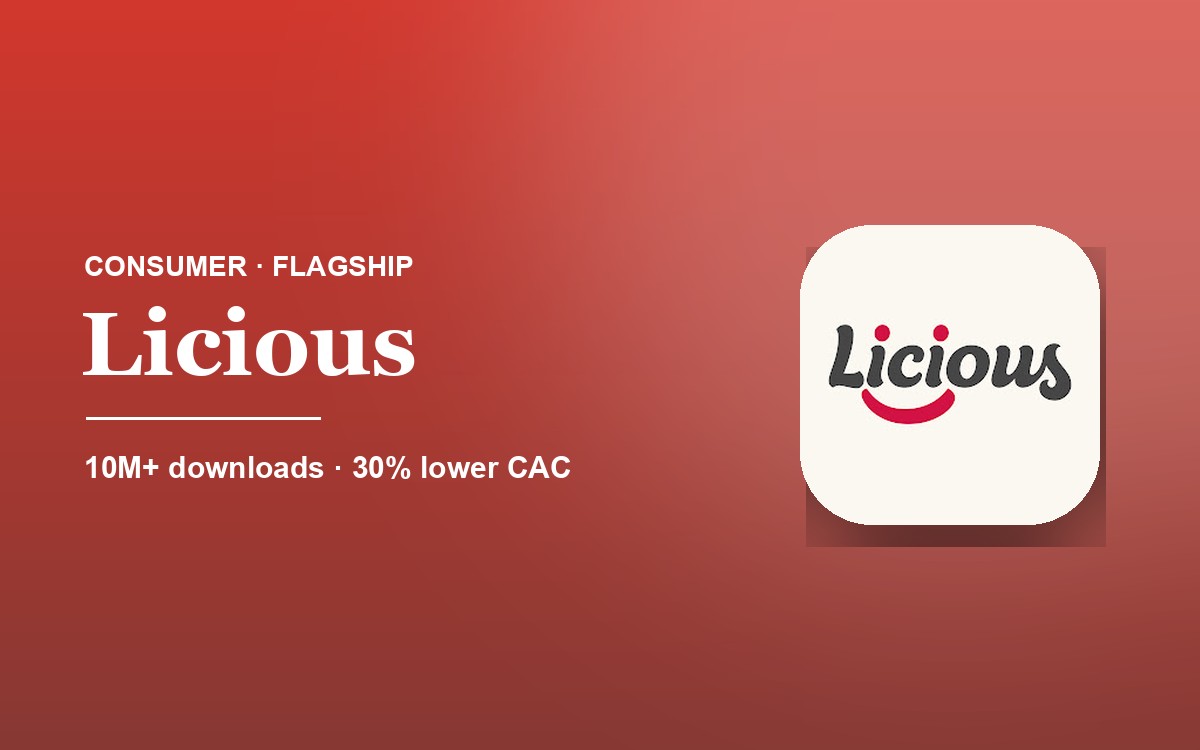
Licious
Meat and seafood delivery
Cut acquisition cost by 30% while lifting lifetime value 55%, so the same spend bought better customers rather than simply more of them.
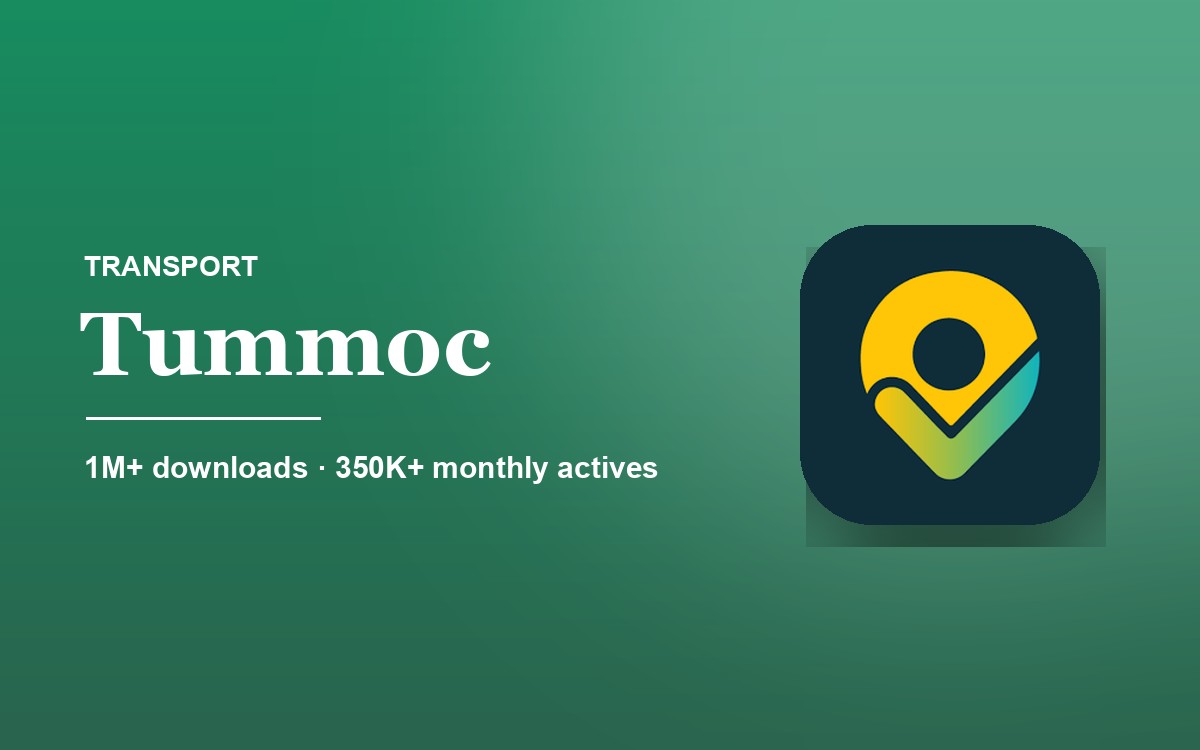
Tummoc
Public transport ticketing
Past a million installs the work stops being downloads and starts being retention. 350K+ people now use it every month.
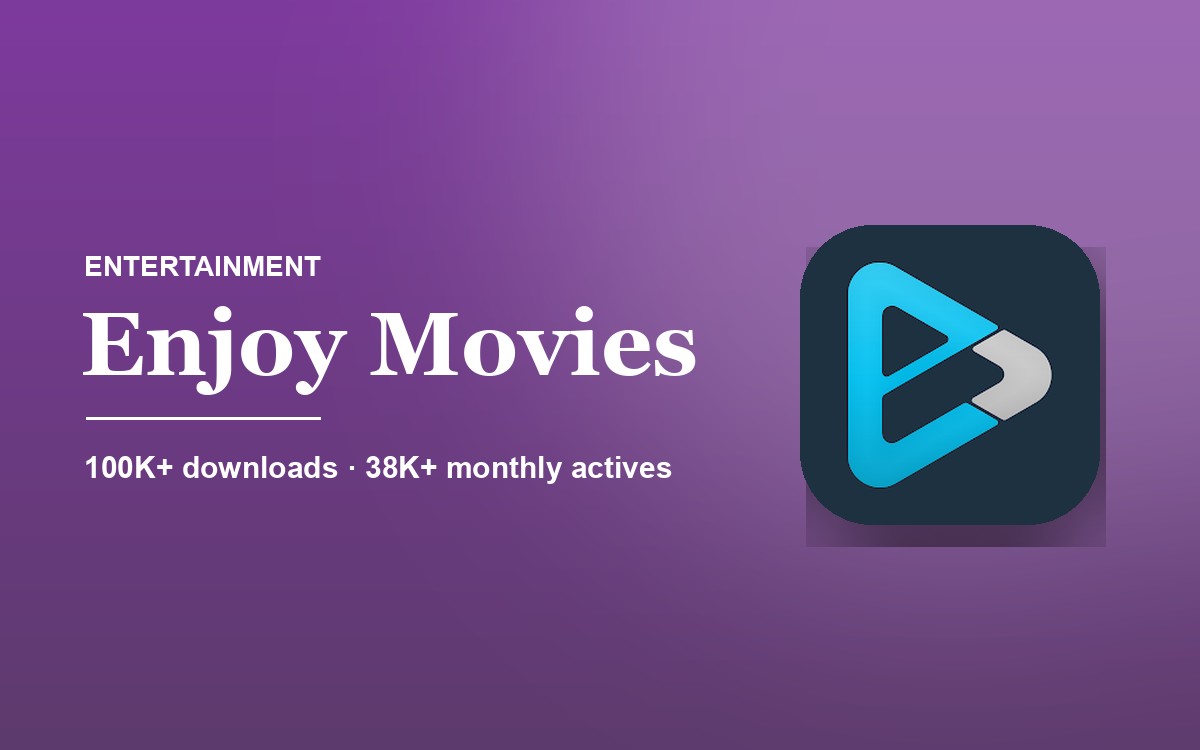
Enjoy Movies Your Way
Family-friendly entertainment app
Educational content, testimonials and UGC built trust, campaigns clarified the app's compliance, and it grew past 100K downloads.
EarningsCall
Earnings-call app for investors
A full campaign across Google Ads, social, ASO and SEO took a finance app from a few thousand installs past 100K downloads.
LunarLinc
Friendship and connection app
A social app we run growth for right now. The developer owns the app, we drive the installs.
Inner Journey
Meditation and affirmations
Personalized content, ASO and store listing optimization. The playbook a wellness app needs.
Parenity
Positive-parenting and wellbeing app
From the same wellness suite as Inner Journey. A portfolio, not a one-off.
Nomadly
Travel and digital-nomad lifestyle app
A recent build in the lifestyle space, live on the App Store.
Tap any store badge and check the live numbers yourself, or read the full case studies →
★ 4.9 out of 5 from 168 client reviews
Read all reviews →★★★★★
“Our CPI dropped from $4.20 to $1.80 in 6 weeks. The creative-iteration loop ships 12 ad variants per week.”
★★★★★
“ASO got us from 2K to 14K monthly organic installs. Store conversion went from 18% to 31% on iOS.”
★★★★★
“From 4K MAU to 47K MAU in 5 months. ApsteQ optimized the entire funnel, not just the ads.”
Free App Marketing Playbooks
Five free guides built from real app launches: benchmarks, budgets, checklists, and the mistakes to skip. No strings, download what you need.
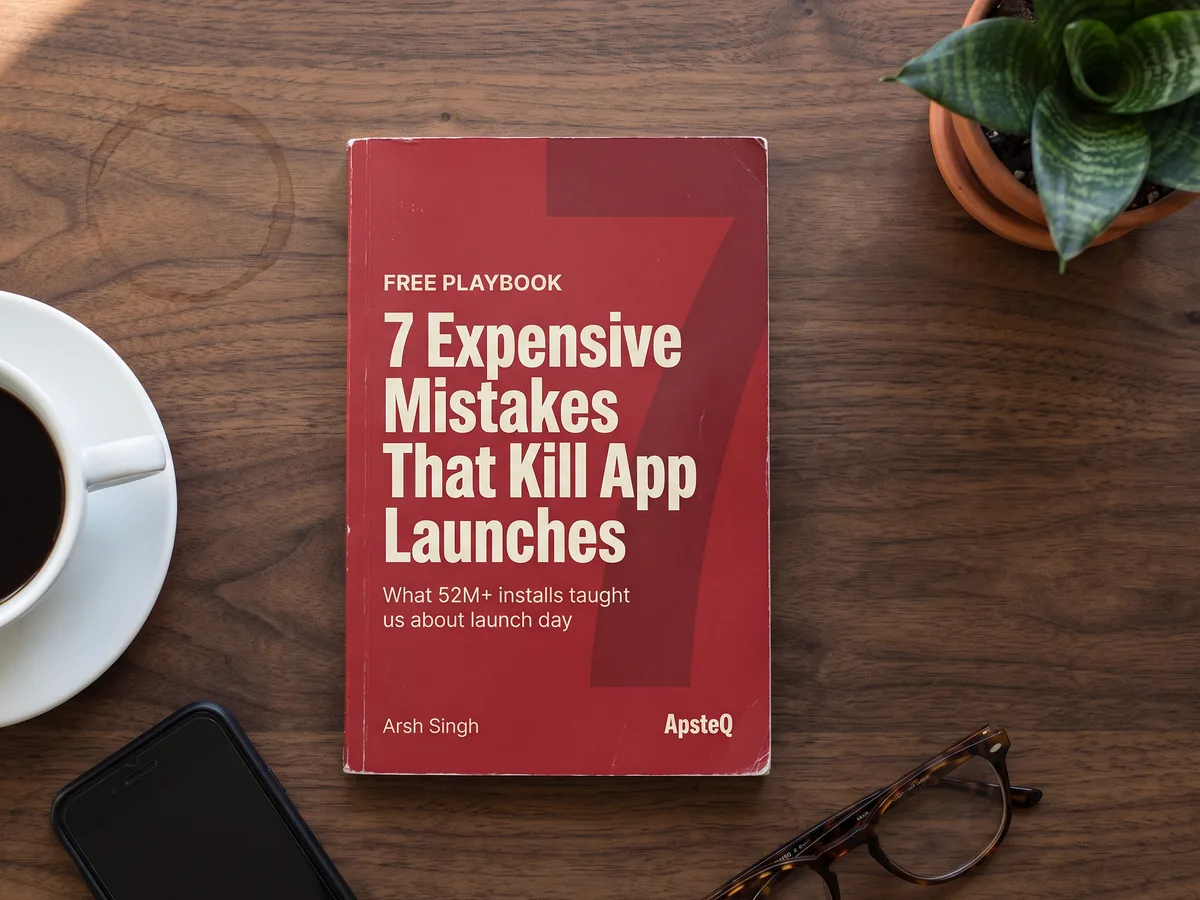
7 Expensive Mistakes That Kill App Launches
Free download →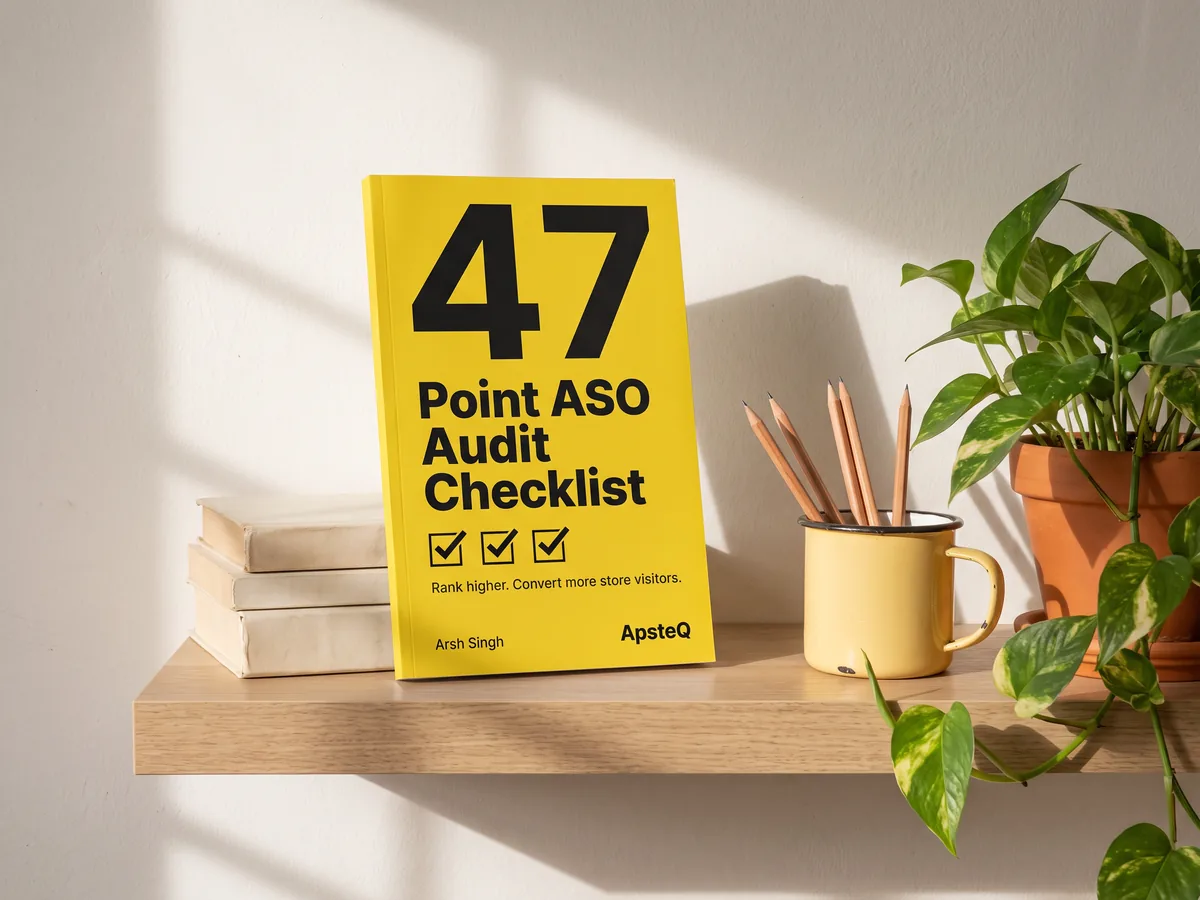
The 47-Point ASO Audit Checklist
Free download →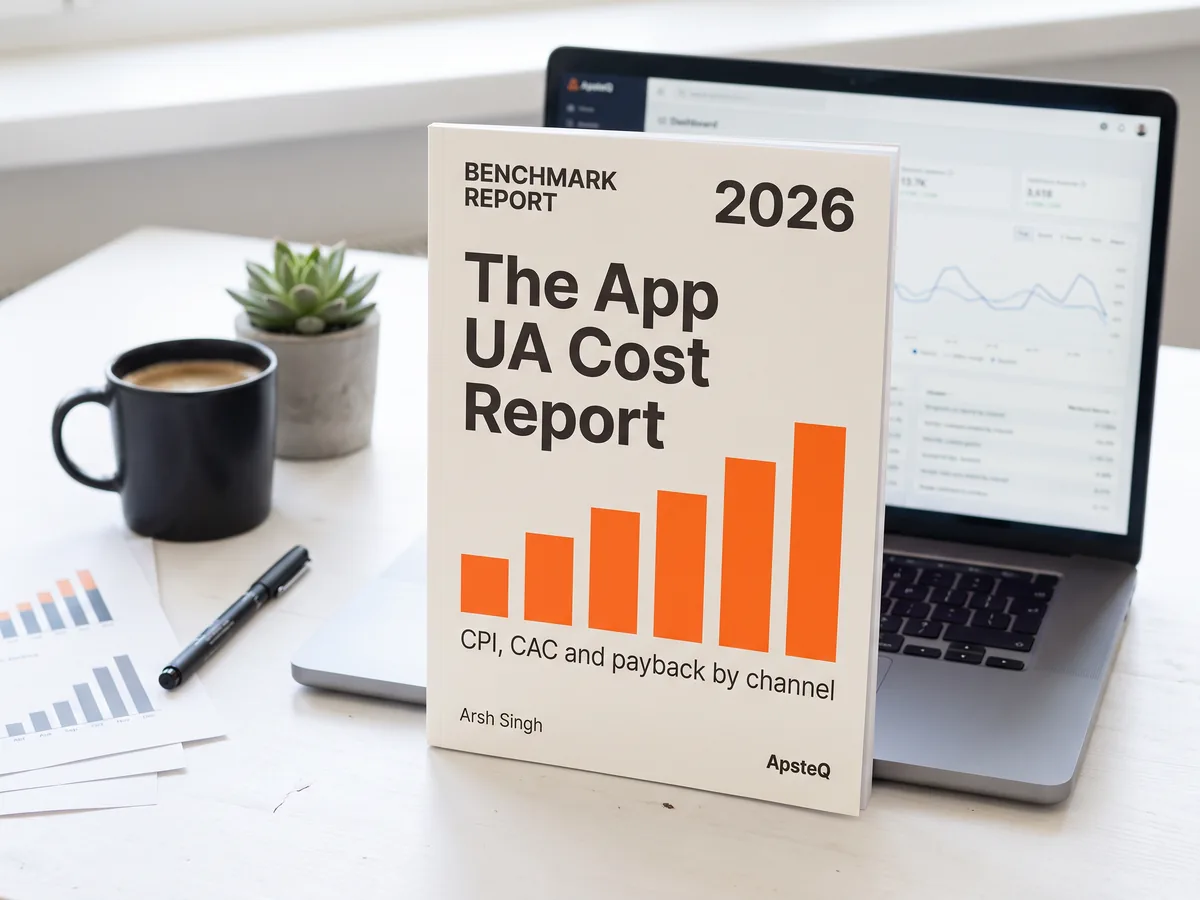
The App UA Cost Report 2026
Free download →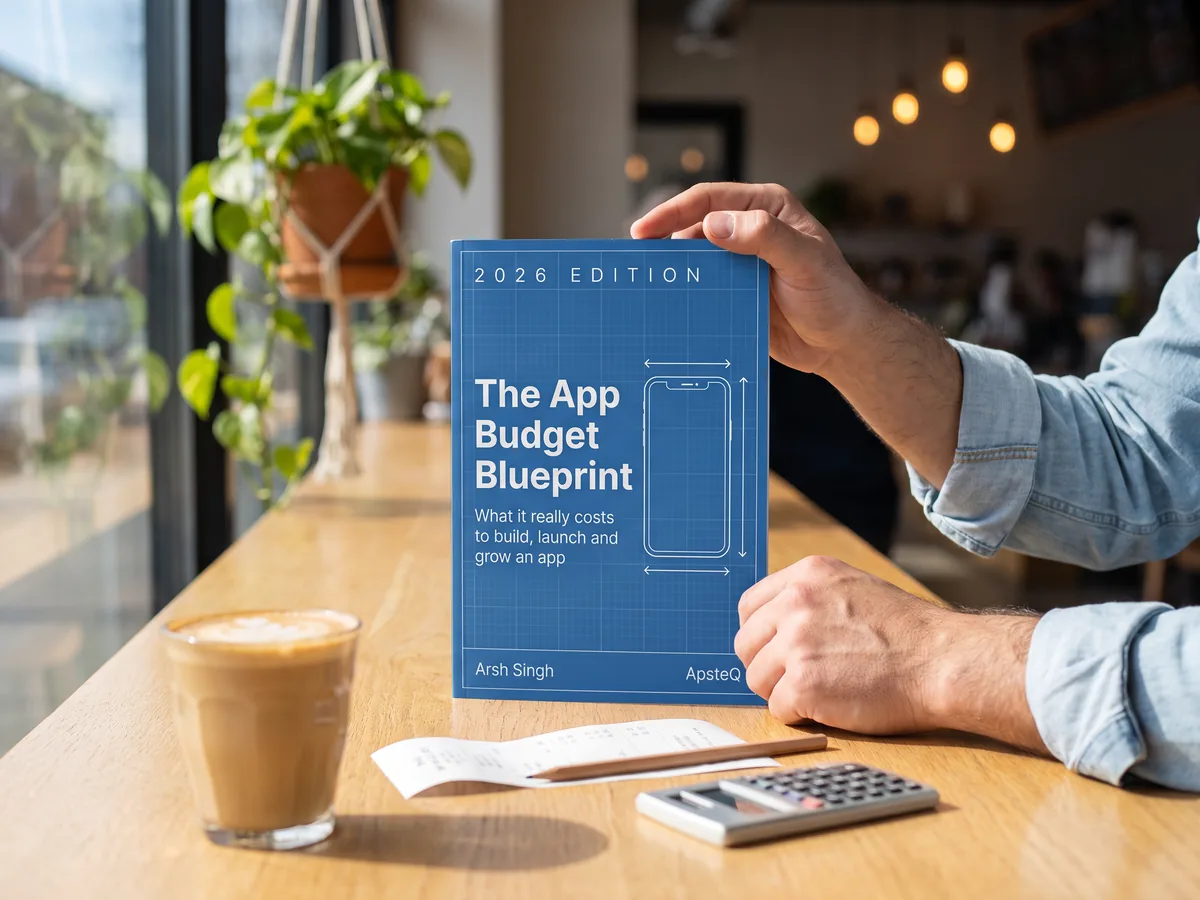
The App Budget Blueprint
Free download →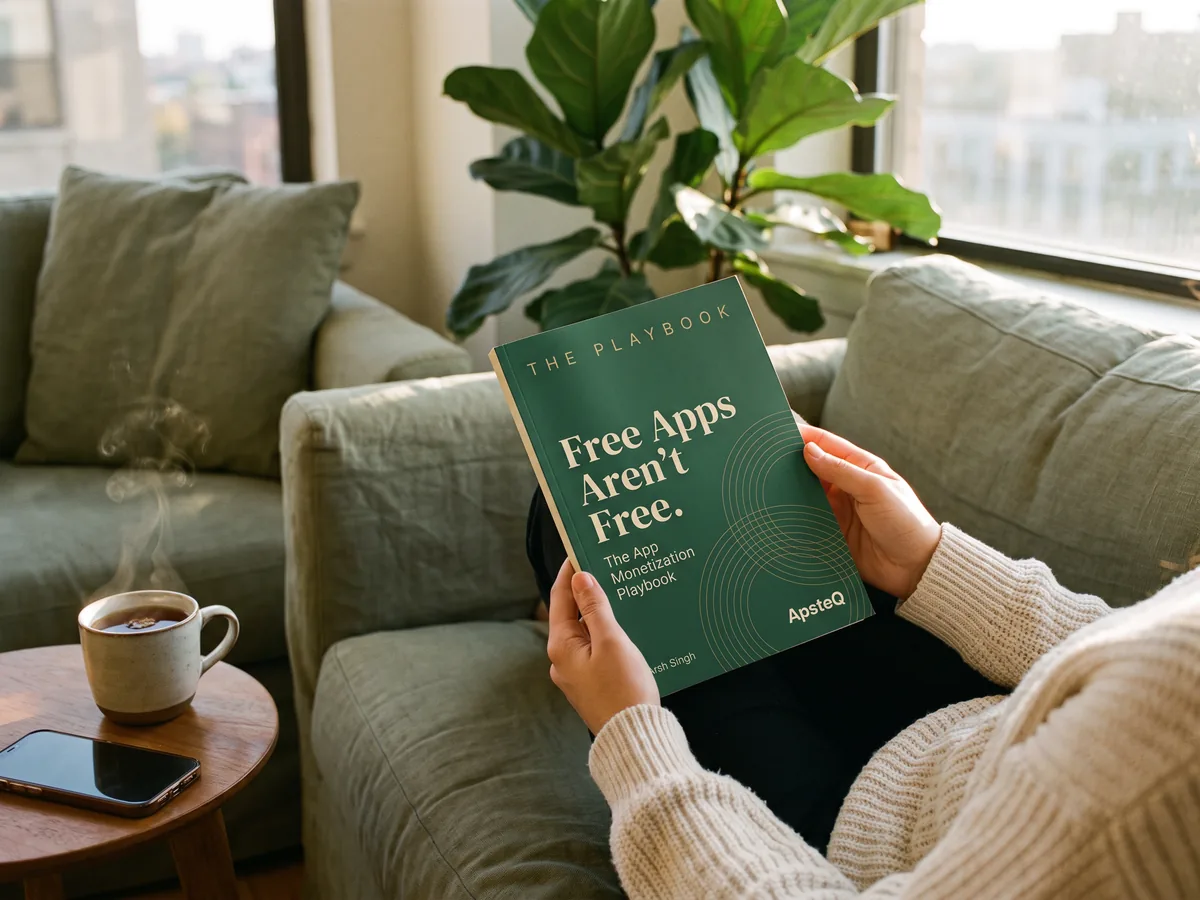
The App Monetization Playbook
Free download →Want them all in one place? Browse all free resources →